
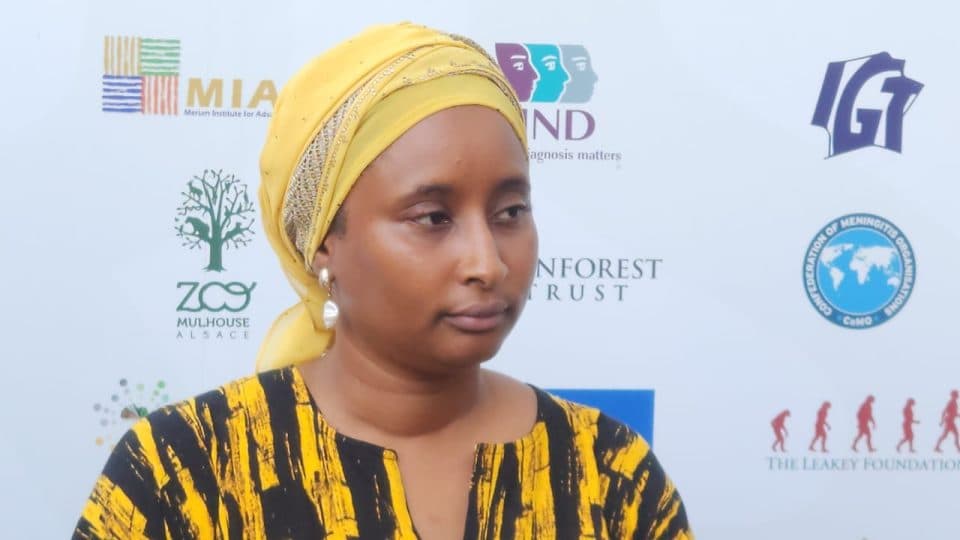
A CSRS researcher recommends a little-known screening test to save babies from meningitis (Interview)
Abidjan, 13 October 2026 (AIP) – Meningitis remains a major public health issue. To mark World Meningitis Day, observed annually on 5 October, the Ivorian Press Agency (AIP) interviewed the research associate at the Centre Suisse de Recherches Scientifiques en Côte d’Ivoire (CSRS), Dr Diallo Kanny. During this interview, given on 5 October 2026, she provides an update on the epidemiological situation, warning signs, the consequences of the disease and the measures that need to be strengthened to achieve the goal of its elimination by 2030.
AIP: What is the current epidemiological situation regarding meningitis in Côte d’Ivoire?
Dr Diallo Kanny: Meningitis is an infection of the membranes protecting the brain (the meninges). Bacteria, viruses or other micro-organisms reach this area via the cerebrospinal fluid and cause inflammation that can destroy brain tissue.
As regards the epidemiological situation, Côte d’Ivoire officially reports around a hundred cases each year through its surveillance system. However, we know that these figures are underestimated due to several factors that prevent certain elements from being taken into account in the data collection process.
AIP: What are the early symptoms that should serve as a clear warning to the public and frontline healthcare professionals?
Dr Diallo Kanny: The symptoms of meningitis are quite similar to those of other conditions, such as malaria. In particular, they include a sudden onset of high fever (above 39 °C), vomiting and headaches.
Nevertheless, neck stiffness is a symptom that is highly specific to meningitis, as is photophobia (increased sensitivity to light, caused by brain damage). If these signs are observed simultaneously in a person, meningitis must be suspected immediately and a lumbar puncture carried out to confirm the diagnosis.
AIP: Apart from the risk of death, what other consequences can meningitis have for an individual?
Dr Diallo Kanny: The disease is fatal in around 10 per cent of cases. But it is important to emphasise that one fifth (20 per cent) of survivors are left with significant long-term effects. As the brain is affected, these after-effects can be neurological, visual or auditory in nature, or may manifest as learning difficulties, which can sometimes be difficult to detect. Furthermore, when the bacteria spread throughout the body (septicaemia), this can lead to limb amputations if the patient is not treated in time.
AIP: Could you explain the learning difficulties and academic delays observed in some children who have recovered?
Dr Diallo Kanny: By causing inflammation, meningitis damages areas of the brain, which can impair memory and learning abilities. Diagnosing these long-term effects is complex: it is often only when the child starts school that their difficulties become apparent, without the link always being made to meningitis contracted at a younger age.
It is essential that teaching staff recognise that some pupils suffer from cognitive impairment or hearing loss as a result of a brain infection, which has a direct impact on their academic performance.
AIP: How can a pregnant woman ensure that her unborn baby will not contract meningitis at birth?
Dr Diallo Kanny: It is recommended that women undergo routine screening for Group B Streptococcus (GBS) during the third trimester of pregnancy, using a vaginal swab. As this test is not routinely carried out, it is still a chargeable service, but it is available on request at certain healthcare facilities and clinics.
In women, carrying this bacterium is completely asymptomatic. This is because she does not feel ill and experiences neither itching nor pain. The risk mainly concerns the baby. If the bacterium is detected in the mother, we administer a course of antibiotics before or during labour to prevent vertical transmission. This protects the newborn, who would otherwise be at risk of developing severe meningitis within the first week of life.
AIP: What are the priority areas and projects currently being undertaken by your research team?
Dr Diallo Kanny: As part of the molecular epidemiology research team at the Centre Suisse de Recherches Scientifiques en Côte d’Ivoire (CSRS), we are working on infectious bacterial diseases across three main areas. Firstly, there is diagnosis, which enables us to improve the effectiveness and reduce the costs of tests, whilst developing diagnostic solutions that are as close as possible to patients. Secondly, through surveillance, we identify and resolve bottlenecks to make the data collection system more efficient. Finally, there is treatment, which involves studying the pharmacopoeia and local plants to identify active molecules effective against these pathogens and, ultimately, to develop herbal medicines.
AIP: When was the last major meningitis outbreak in Côte d’Ivoire?
Dr Diallo Kanny: The last major outbreak was reported in 2012, followed by a few clusters of cases in 2016. Historically, the bacterium responsible for major outbreaks was meningococcus. The large-scale vaccination campaign carried out in 2012 succeeded in halting the circulation of this major strain. Whilst we no longer see very large epidemics as in the past, other bacterial strains continue to circulate and cause sporadic cases.
AIP: Based on your research, what scientific approaches offer the best hope of eradicating meningitis in Côte d’Ivoire by 2030?
Dr Diallo Kanny: The first key factor is scientific evidence. To make effective public health decisions, we need reliable and representative epidemiological data.
The second measure is vaccination. The Expanded Programme on Immunisation (EPI) already provides free vaccines to children under one year of age that protect against several bacteria responsible for meningitis (Haemophilus influenzae, Neisseria meningitidis, Streptococcus pneumoniae). We must ensure the continued availability and accessibility of these vaccines throughout the country.
Finally, for bacteria for which there is not yet a vaccine, such as Group B streptococcus, which affects newborns, the main strategy lies in prevention through antenatal screening and preventive treatment of the pregnant woman.
(Interview by Tanguy Gahié) / (AIP)