🎤 SPEAKERS & PRESENTERS
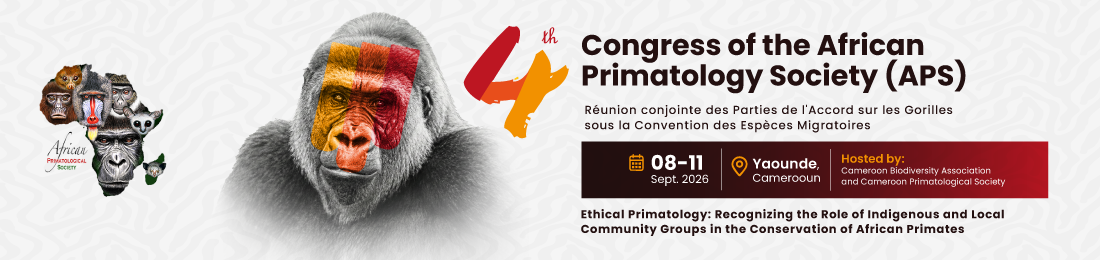
The 4th Congress of the African Primatological Society (APS) will feature:
- Keynote presentations from leading primatologists and decision-makers, selected to address the congress theme and provide cutting-edge perspectives on primate research and conservation.
- A special Commemorative Plenary to open the congress, setting the tone for scientific exchange and collaboration.
- A diverse programme of plenary sessions, group symposia, poster presentations, and roundtable discussions, ensuring broad coverage of research, policy, and practice.
APS 2026 will open with a special plenary session dedicated to the memory of three remarkable scientists who profoundly shaped the field of African primatology:
Dr. Augustin Basabose
Renowned Congolese primatologist and conservationist whose work advanced great ape research and community-based conservation.
Dr. Jane Goodall
Legendary primatologist and conservationist, long-time advocate for chimpanzees and African communities, and a global voice for environmental stewardship.
Dr. Rose Marie Randrianarison
Pioneering Malagasy primatologist and lemur conservation leader, instrumental in advancing primate research and conservation in Madagascar.
This commemorative plenary will honour their legacies and inspire participants to continue pursuing their vision for primate conservation in Africa.


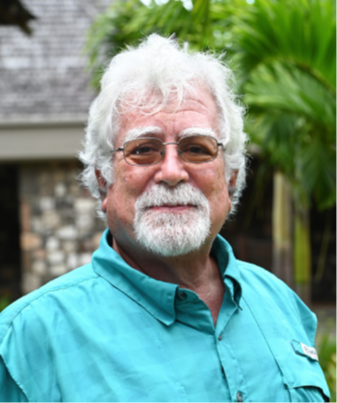
Steve Schapiro is Professor of Comparative Medicine and Chief of the Section of Primate Behavior and Environmental Enrichment in the Department of Comparative Medicine of The University of Texas MD Anderson Cancer. He earned his Ph.D. from the University of California, Davis for studies of guenon behavior conducted at the Institute of Primate Research (IPR) in Kenya (now KIPRE) in the early 1980s. For almost 38 years, his research group has been conducting studies focused on the behavior and welfare of captive NHPs, including rhesus monkeys, squirrel monkeys, baboons, and chimpanzees, including collaborative research projects funded by NIH and NSF. An important emphasis of his research program is to provide non-human primates with opportunities to voluntarily participate in their own care. He is a co-founder of the Primate Training and Enrichment Workshop and the founder and organizer of the Primate Behavioral Management Conference, the Primate Management Conference Mauritius, and the Primate Management Conference Kenya. He is the editor of the first edition of the Handbook of Primate Behavioral Management (HPBM) and co-editor of the Handbook of Laboratory Animal Science, Behavioral Biology of Laboratory Animals, and the second edition of the HPBM. He is a past-president and former treasurer of the American Society of Primatologists (ASP), and the former treasurer and vice president for membership of the International Primatological Society (IPS). He has organized the ‘3Rs for the CPRC’ (a/k/a Project Monkey Island), an effort to revitalize Cayo Santiago after the devastating effects of Hurricane Maria. He is an Honorary Member of the Association of Primate Veterinarians and the recipient of service and achievement awards from ASP, IPS, and the African Primatological Society.

Prof. Edward Wiafe Debrah is a Professor of Conservation Biology and Pro Vice-Chancellor of the University of Environment and Sustainable Development (UESD), Somanya, Ghana. He is a conservation scientist, primatologist, and environmental governance expert whose research focuses on biodiversity conservation, primate ecology, human-wildlife conflict management, forest ecology, environmental impact assessment, and sustainable development in Africa.
Prof. Wiafe Debrah previously served with the Wildlife Division of the Forestry Commission of Ghana, where he worked in protected area management and conservation enforcement at Kakum National Park. Over the years, he has conducted extensive research on endangered primates of the Upper Guinea Forest ecosystem, including the critically endangered Roloway monkey, Lowe’s monkey, and White-thighed Colobus. His work has contributed to IUCN Red List assessments, conservation action plans, and international biodiversity policy frameworks.
He has published widely in peer-reviewed international journals and books on conservation science, ecosystem management, restoration ecology, wildlife conservation, and community-based natural resource management. His recent works include contributions to climate-resilient chimpanzee conservation, urban biodiversity studies, and the 2026 Springer book Wildlife Conservation and Agriculture Development in Africa.
Prof. Wiafe Debrah is an active member of several international scientific bodies, including the International Primatological Society, Society for Conservation Biology, African Primatological Society, West African Primate Conservation Action (WAPCA) and the International Union of Forest Research Organizations (IUFRO). Through his scholarship, leadership, and applied conservation work, he continues to promote the integration of science, policy, and community participation in advancing sustainable development and biodiversity conservation across Africa.